What Did the Lab Reveal?
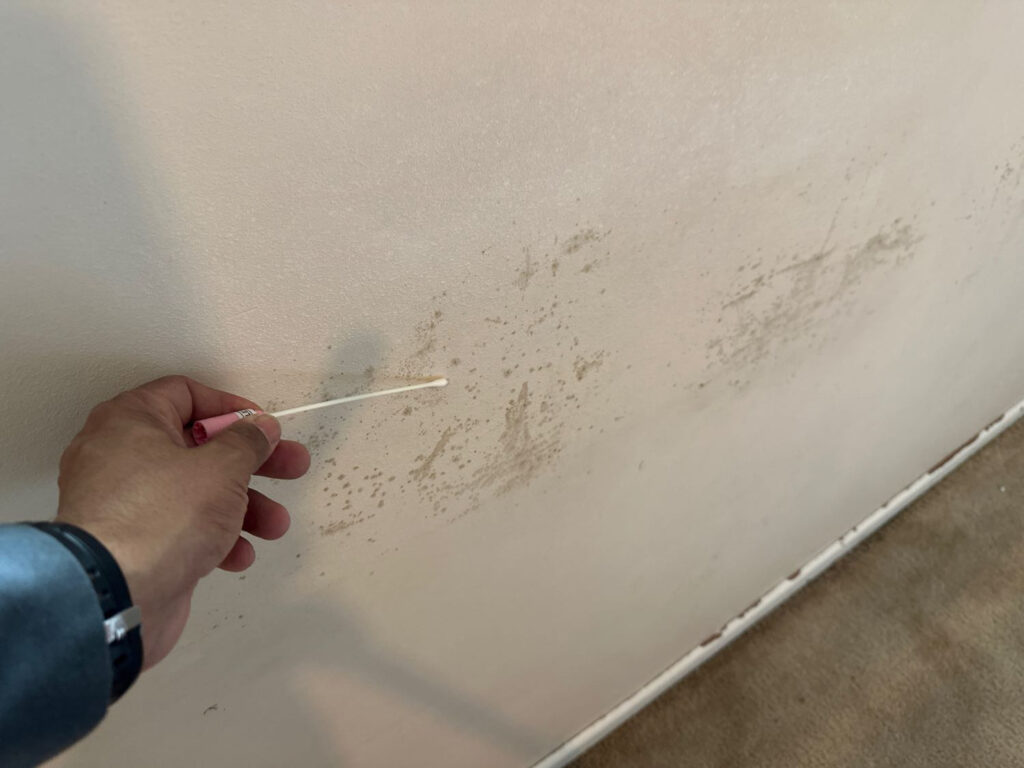
Dark spotting on a wall raised a question during this inspection. A surface swab and indoor and outdoor air samples were collected so the observed condition could be documented with laboratory results.
What We Observed
Suspected growth was visible on an interior wall. Its appearance was enough to warrant attention, but a photograph alone could not tell us exactly what was present in the sampled area.
The wall was swabbed, and the samples were sent for analysis.
What the Laboratory Reported
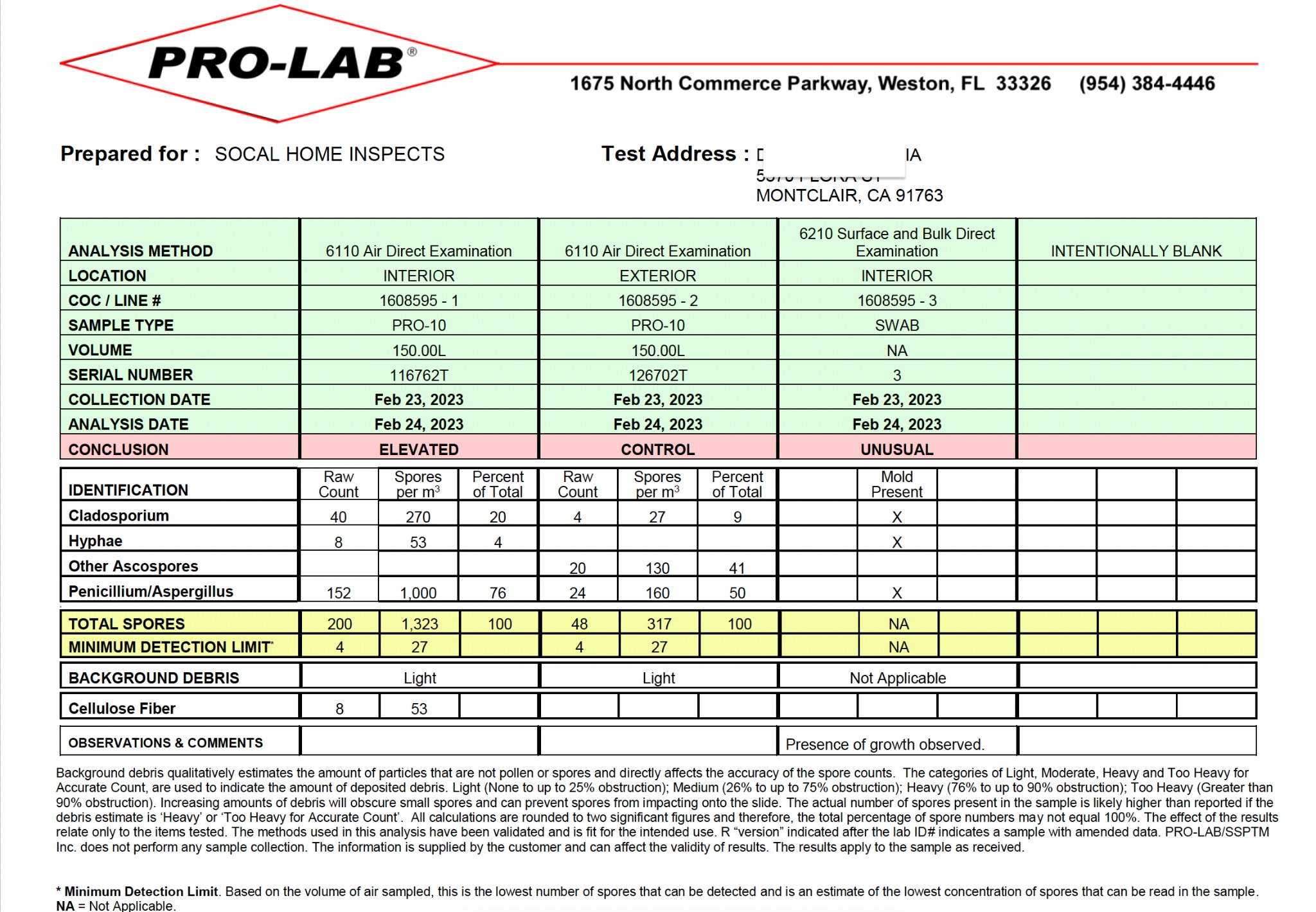
The laboratory marked the surface swab “UNUSUAL” and reported Penicillium/Aspergillus present in that sample. It classified the interior air sample as “ELEVATED” and the exterior air sample as “CONTROL.”
Those are the laboratory’s findings for the samples collected during this inspection. They add evidence to the visual observation, but they do not identify the source of moisture or show how far the condition extends beyond the sampled area.
Why It Matters
Growth on an interior wall raises a practical question: where is the moisture coming from? A lab report can help document what was found, but correcting the underlying moisture condition remains essential.
In this case, the inspection connected three pieces of evidence: visible wall growth, a surface swab, and the laboratory’s findings.
What Buyers Should Know
Visible growth or water damage deserves attention whether or not samples are collected. Testing can help answer a specific question about a condition, as it did here. It should not replace an investigation of the moisture source or appropriate correction of the affected area.
The lesson from this finding is straightforward: observe the condition, document what is known, and follow the evidence to the moisture problem.