Can Your Inspector Properly Interpret a Thermal Image?
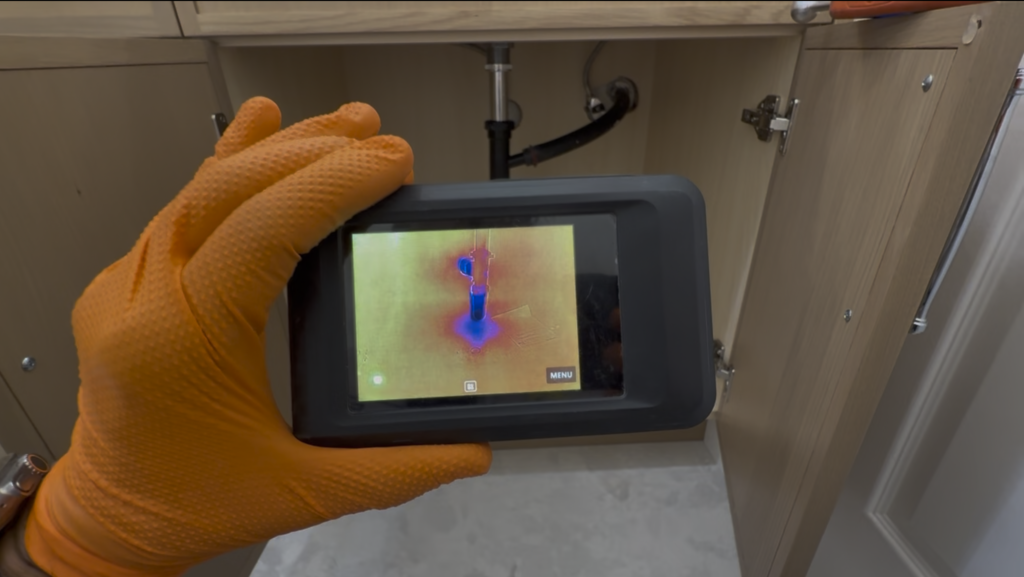
During this inspection, a thermal camera was used to examine the plumbing beneath a sink. The video shows both the visible plumbing and the temperature patterns displayed by the camera.
A thermal camera records differences in surface temperature. Understanding what those patterns mean requires knowledge of the materials, surrounding conditions, and components being examined.
What We Observed
The thermal display showed a distinct temperature pattern aligned with the exposed drain assembly. The surrounding cabinet materials displayed a different thermal pattern.
The footage documents what appeared on the thermal camera during the inspection. The colors alone do not establish that moisture or a plumbing leak was present. Thermal patterns can be affected by water use, surrounding temperatures, materials, reflections, and other conditions.
Why It Matters
A thermal camera can help an inspector identify temperature differences that deserve closer attention. The equipment does not see through walls or independently diagnose the cause of a pattern.
Proper interpretation involves comparing the thermal display with the visible conditions and understanding how the inspected component should perform. When moisture is suspected, additional evaluation with a moisture meter or other supporting evidence may be appropriate.
What Buyers Should Know
Buyers should ask whether thermal imaging is included with their inspection and whether the inspector has received formal thermography training or certification.
The value of thermal imaging depends on more than owning the camera. The inspector must understand the display, recognize possible sources of a temperature difference, and avoid presenting a thermal pattern as proof of a condition that has not been confirmed.
This inspection demonstrates how thermal imaging can support a visual evaluation when the equipment is used and interpreted properly.