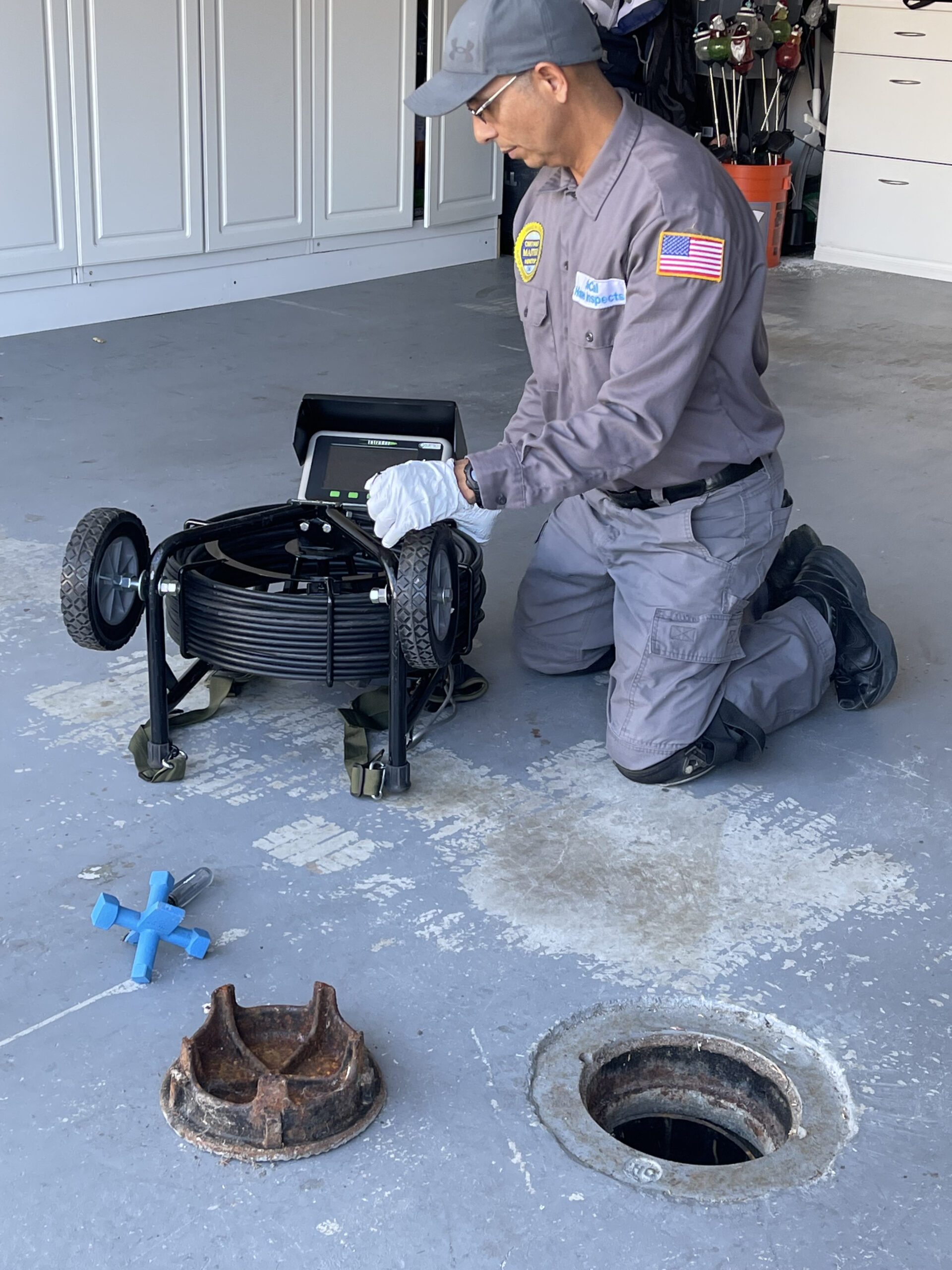
A sewer inspection provides a direct view inside the underground sewer line, where hidden damage, obstructions, and installation defects cannot be seen during a standard home inspection.
What Is a Sewer Inspection?
A sewer inspection uses a specialized camera to examine the interior of the underground sewer line through an accessible cleanout. The camera is advanced through the piping to observe its visible condition and identify defects that could interfere with drainage or lead to costly repairs.
The inspection may reveal root intrusion, cracked or broken piping, displaced connections, low spots, deteriorated materials, blockages, construction debris, or other abnormal conditions. The inspection is recorded so the client can see the observed conditions directly.
Who Should Get a Sewer Inspection?
In my professional opinion, sewer inspections are particularly important for:
- Brand-new homes
- Homes more than 50 years old
New construction can contain installation defects, construction debris, damaged piping, or improper connections. Older homes may have deteriorated materials, root intrusion, offsets, corrosion, or piping that has reached or exceeded its expected service life.
For homes between those age ranges, I recommend considering the property’s age, sewer material, surrounding trees, drainage performance, repair history, and the buyer’s tolerance for risk. Those properties are evaluated on a case-by-case basis.
Why a Standard Home Inspection Is Not Enough
The underground sewer line is concealed and cannot be evaluated by operating plumbing fixtures alone. Sinks, toilets, and tubs may drain normally even when significant defects are present farther downstream.
A sewer inspection provides information about the condition of the buried piping before ownership transfers, when the buyer still has an opportunity to understand the issue and make an informed decision.
How I Perform a Sewer Inspection
I insert a professional sewer camera through an accessible cleanout and advance it through the sewer line as conditions permit. The inspection video is recorded and reviewed for visible defects, obstructions, abnormal transitions, and drainage concerns.
When a significant defect is identified, I use a locator to determine its approximate position and depth. This information can help a qualified plumbing or sewer contractor locate the affected area and plan corrective work more efficiently.
What You’ll Receive
- Recorded sewer inspection video
- Written report with photographs
- Location and depth of significant defects (when applicable)
- Professional recommendations based on observed conditions
Common Sewer Defects
- Root intrusion
- Cracked or broken piping
- Offset or separated connections
- Low spots that retain water
- Deteriorated cast-iron piping
- Damaged clay piping
- Improper transitions between materials
- Heavy buildup or restricted flow
- Construction debris
- Collapsed piping
- Cleanout defects
What a Sewer Inspection Does Not Include
A sewer inspection is limited to visible and accessible portions of the line that the camera can enter. Standing water, heavy debris, obstructions, inaccessible cleanouts, sharp turns, damaged piping, or restricted access may prevent complete inspection.
The inspection does not include excavation, destructive testing, hydrostatic testing, repairs, or evaluation of municipal piping beyond the accessible private sewer line.
Real Sewer Inspection Findings
- Root intrusion discovered during a sewer inspection
- Broken clay piping identified underground
- Offset connection restricting drainage
- Standing water within a low section of piping
- Heavy corrosion inside cast-iron piping
Frequently Asked Questions
Does a home need to have drainage problems before getting a sewer inspection?
No. A sewer line may contain significant defects while fixtures continue to drain normally.
Can a sewer inspection locate defects?
Yes. When conditions permit, I use a locator to determine the approximate location and depth of significant defects.
Is a sewer inspection worthwhile on a new home?
In my opinion, yes. New sewer lines can contain installation defects, construction debris, damaged piping, or improper connections.
Is a sewer inspection worthwhile on an older home?
I strongly recommend one for homes more than 50 years old because of the increased likelihood of aging materials, root intrusion, deterioration, and prior repairs.
Related Inspection Pages
- Plumbing Inspection
- Foundation Inspection
- Mold Inspection
- Home Inspection Findings
See What Is Happening Inside the Sewer Line Before You Buy
A sewer inspection can reveal hidden conditions that ordinary fixture testing cannot identify.
Visual Overview of What Is Inspected
Explore each component of the home inspection by hovering or tapping on the highlighted areas.

View details
View details
View details
View details
View details
View details
View details
View details
View details
View details